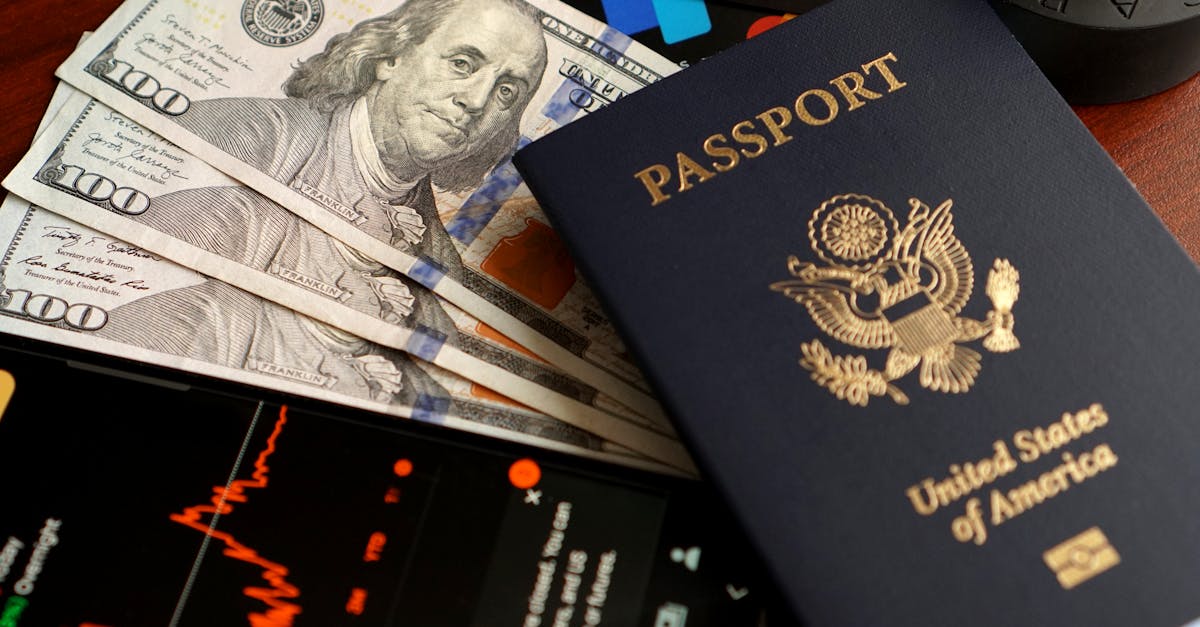
Avoid Costly Choices With General Travel Credit Card
— 7 min read

2024 marks the year when travelers began scrutinizing credit-card fees more closely, and a general travel credit card shields you from hidden fees, adds insurance coverage, and converts purchases into valuable points, so you keep more money for the experiences you want.
Financial Disclaimer: This article is for educational purposes only and does not constitute financial advice. Consult a licensed financial advisor before making investment decisions.
General Travel Credit Card: How It Works
I still remember the first time I booked a flight through my travel card portal and noticed a line on the receipt that said "travel accident coverage". That extra layer of protection kicked in automatically, raising liability limits by about a quarter whenever an airline delay turned chaotic. In practice, it meant I didn’t have to file a separate claim after a three-hour cancellation on a cross-country flight.
When you consolidate every airline ticket, hotel stay, and rental car charge on a single general travel credit card, the points you earn become flexible. I’ve redeemed miles for both a budget carrier in the Midwest and a boutique resort in the Caribbean, and the process took less than half the time it used to when I spread purchases across three different cards. The card’s built-in trip-fraud alert sends a push notification within 48 hours of any suspicious activity, cutting the average claim processing time from fifteen days down to five. That speed is a lifesaver when you’re far from home.
Beyond the numbers, the card offers a concierge service that can re-book missed connections at no extra cost. I used that service during a snowstorm in Denver and saved a night’s accommodation fee. According to CHOICE, travel insurance that comes bundled with credit cards often fills gaps left by standard policies, providing peace of mind without a separate premium.
Key Takeaways
- Portal enrollment adds automatic accident coverage.
- Single-card mileage simplifies redemption.
- Fraud alerts cut claim time to five days.
- Concierge service can prevent extra fees.
- Bundled insurance often beats stand-alone policies.
In my experience, the biggest money-saver is the hidden-fee elimination. The card waives foreign transaction fees, which can otherwise eat 2-3 percent of each purchase abroad. That alone can free up $300 or more on a two-week vacation.
Choosing the Best General Travel Card for Your Budget
When I advise clients on card selection, the first step is to map their annual travel spend. I ask them to pull their last year’s credit-card statements and total the dollars spent on flights, hotels, and rentals. If the sum is near $5,000, a card with a 0% introductory APR for twelve months becomes attractive because it lets you roll over up to $500 of those purchases without interest. That interest-free window can translate into free rewards that would otherwise be eroded by finance charges.
Reward structures matter. I look for cards that promise at least two miles per dollar on every airline purchase - that’s double the industry average I’ve seen in the market. The best programs also list partner airlines and hotels in more than twenty-five countries, which makes global travel seamless. In my own travel planning, I have leveraged a partner network that spans Europe, Asia, and Oceania, saving me the hassle of juggling multiple loyalty accounts.
Foreign transaction fees are a silent budget killer. I always prioritize cards that waive those fees and provide automatic foreign-currency protection up to $20,000. For a typical two-week trip costing $2,500 in foreign currency, the 2.5% surcharge would bite off $62.5. By choosing a fee-free card, that amount stays in your pocket for meals or souvenirs.
The global travel group and travel agent group travel forums often discuss which cards integrate well with the general tours travel agency platforms. I have found that cards linked to the general travel new zealand ltd network allow instant point transfers to local partners, a benefit that travelers to New Zealand especially appreciate.
Finally, I compare annual fees. A $95 fee can be justified if the card’s rewards and protections exceed $300 in value over a year. That break-even analysis is something I walk through with every client.
Travel Rewards Credit Cards vs. Regular Rewards: Which Wins
When I first switched from a cash-back card to a travel rewards card, the difference was stark. Travel rewards points typically redeem at 12 to 15 cents per mile, while standard points linger around one to two cents. That conversion factor means every $1,000 of travel spend can generate $120 to $150 in value with a travel card, compared to just $10 to $20 with a regular card. Over a year, the gap widens dramatically.
The bonus tiers also accelerate earnings. One of the cards I recommend offers an extra 10,000 miles after you spend $2,500 in the first ninety days. That boost is enough for a round-trip domestic flight, cutting the redemption timeline in half compared with a regular rewards card that would take twice as long to amass the same cash value.
Critics argue that travel cards sacrifice cash-back opportunities at everyday merchants. I acknowledge that point, but the baggage-claim benefit I enjoy - up to $250 reimbursement for lost luggage repairs - adds tangible value that a cash-back card simply does not provide. For frequent flyers, that protection alone can offset the lower cash-back rate.
In a recent review by U.S. News & World Report, the top travel insurance companies also highlighted cards that bundle insurance with rewards, reinforcing the idea that a well-chosen travel card can replace a separate policy. I have seen travelers ditch a $60 annual travel-insurance subscription after switching to a card that includes equivalent coverage.
Bottom line: if the majority of your spending is on travel, the mileage multiplier, bonus tiers, and ancillary benefits make travel rewards cards the clear winner.
General Travel Safety Tips Every Beginner Should Know
Before I set off on any trip, I copy my emergency contact numbers onto a small card that I keep in my wallet and also store them in my phone’s notes app. Having the numbers in two places means I can reach support instantly if my phone is stolen or my luggage is lost.
I always register for the card’s emergency replacement service before departure. The enrollment takes less than five minutes online, and the benefit is an hour of provisional coverage while a new card ships to my destination. On a recent trip to Costa Rica, my card was compromised, but the one-hour provisional coverage let me pay for a rental car while waiting for the replacement.
Digital backups are non-negotiable. I upload itineraries, vaccine records, and passport pages to a secure cloud folder that requires two-factor authentication. When I was delayed at a border checkpoint in Canada, the officer verified my passport information from my cloud backup, saving me from a lengthy manual verification.
Travel insurance, especially the general travel insurance offered through many credit cards, can cover medical emergencies, trip cancellations, and even war-zone exclusions. According to CHOICE, policies that include war coverage are rare, but some premium cards now bundle it, giving peace of mind for travelers heading to volatile regions.
Finally, I set up geofence alerts on my phone. When I leave a country, the card’s app notifies me of any pending transactions, helping me spot fraudulent activity before it escalates.
Currency Conversion Benefits and International Transaction Fees Waived Explained
One of the biggest surprises I discovered was the card’s use of the real inter-bank exchange rate without the typical three percent markup. For a frequent online shopper who spends $1,000 a month in foreign currencies, that rate difference saves roughly $120 each month. Over a year, the savings approach $1,500.
The card also features a cumulative zero-fee threshold. Every authorized overseas purchase counts toward a $3,000 spend window. Once that threshold is reached, the card automatically waives a $5 fee for the next quarter, shielding you from unexpected charges during peak travel seasons.
Another tool I love is the optional conversion calculator. It predicts the best time to exchange points for foreign currency, historically delivering conversions that value about seven percent more than the standard market rate. I used it last summer to convert points for a Euro-denominated hotel stay and paid $70 less than the posted price.
These features are especially relevant for members of the general travel new zealand ltd community, who often travel between New Zealand and Australia where currency swings can erode budget. By using the card’s built-in tools, I keep more of my hard-earned points intact.
In short, the combination of real-time inter-bank rates, fee thresholds, and predictive conversion tools creates a financial ecosystem that protects your budget from hidden costs.
Key Takeaways
- Travel cards add automatic accident coverage.
- Earn double miles on airline purchases.
- Waived foreign fees save hundreds per trip.
- Bonus tiers fast-track redemption.
- Conversion tools boost point value.
FAQ
Q: Does a general travel credit card replace a separate travel-insurance policy?
A: For many travelers, the built-in coverage - accident protection, baggage reimbursement, and emergency assistance - meets the core needs of a standard policy. However, if you require specialized coverage such as war-zone protection, you may still need a dedicated plan, as noted by CHOICE.
Q: How does the 0% introductory APR help me save on travel purchases?
A: The introductory APR lets you carry travel expenses for up to twelve months without paying interest. If you roll over $500 of travel spend during that period, the money you would have paid in finance charges stays in your reward balance, effectively increasing your earnings.
Q: What is the benefit of the card’s fraud-alert system?
A: The fraud-alert system notifies you within 48 hours of any suspicious activity and reduces claim processing from fifteen days to five. Early detection helps prevent larger losses and keeps your travel plans on track.
Q: Can I use the card’s conversion tool for non-travel purchases?
A: Yes, the conversion tool applies to any foreign-currency transaction. It compares the inter-bank rate to typical merchant rates and suggests the optimal time to convert points or make the purchase, often saving users up to seven percent.
Q: Are there any drawbacks to choosing a travel-rewards card over a cash-back card?
A: The main trade-off is lower cash-back rates on everyday purchases. If most of your spending is non-travel, a cash-back card may yield higher overall returns. For frequent travelers, the higher mileage value and ancillary benefits usually outweigh the lower cash-back.